
Influencers Criticize Birth Control and Push ‘Natural’ Methods: Here’s What You Need to Know
Social media influencers are increasingly questioning the safety of hormonal birth control, claiming it can cause everything from depression and infertility to acne, hair loss, and decreased libido. At the same time, some promote “natural” alternatives like fertility tracking apps, temperature-based methods, or herbal supplements as safer ways to prevent pregnancy.
Is Hormonal Birth Control Dangerous?
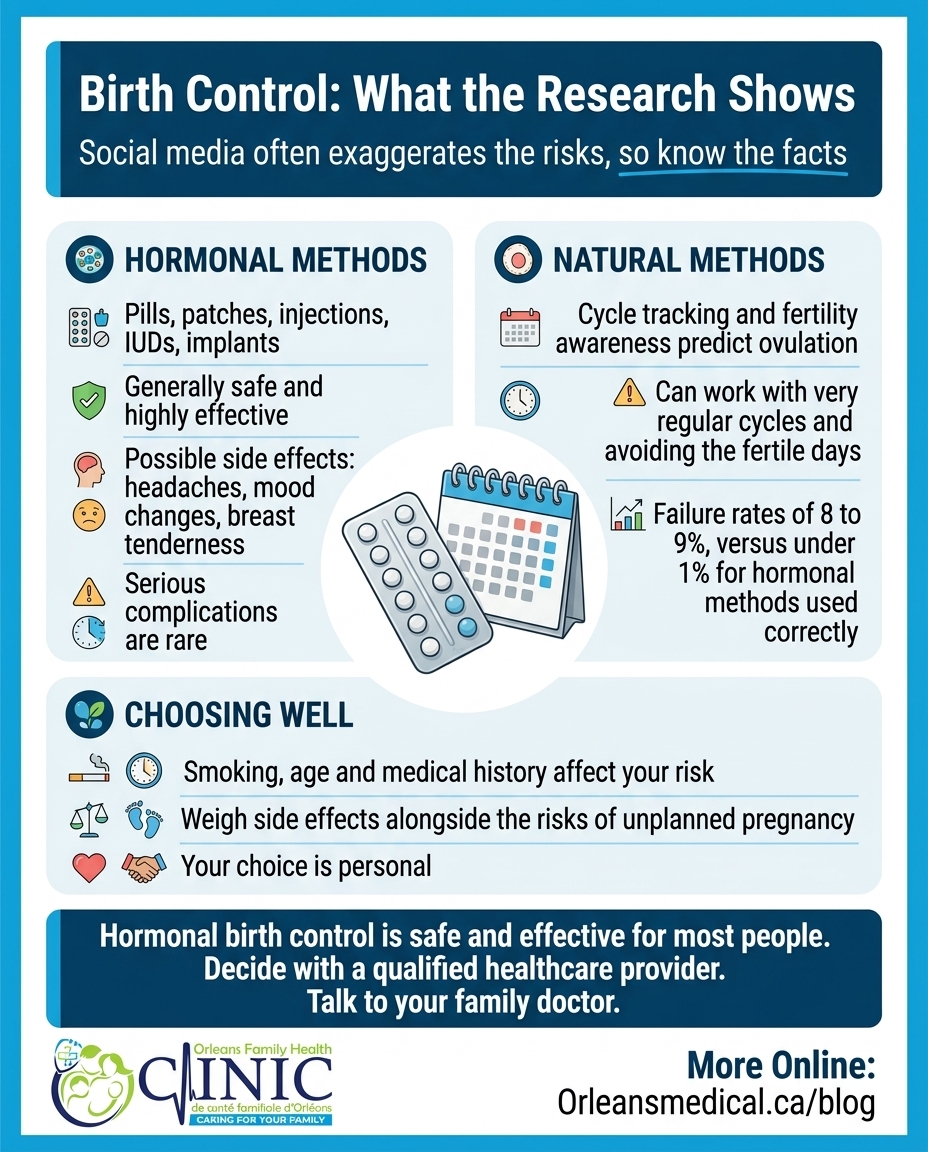
Decades of research confirm that hormonal birth control (including pills, patches, injections, IUDs, and implants) is generally safe and highly effective. While some users experience side effects such as headaches, mood changes, or breast tenderness, serious complications are rare. Blood clots or IUD-related issues occur infrequently, and oral contraceptives may slightly increase the risk of certain cancers while reducing the risk of others.
Experts stress the importance of individualized assessment. Factors such as smoking, age, and medical history can affect risk. “Google or social media will never have the answer because you are your own unique being,” says Dr. Jennifer Conti, obstetrician at Stanford University.
Social media often amplifies rare complications. A study examining TikTok videos on contraception found only 10% were produced by medical professionals, and rare adverse events were frequently exaggerated.
Natural Methods: How Effective Are They?
Fertility awareness and cycle tracking apps rely on predicting ovulation to avoid pregnancy. While they can work for individuals with highly regular cycles who practice voluntary abstinence during fertile periods, studies show failure rates of 8–9%, compared to under 1% for hormonal methods when used correctly.
“Those that use natural family planning often have naturally large families,” notes Dr. Jeffrey Jensen, vice chair for research in obstetrics and gynecology at Oregon Health & Science University.
The Importance of Context and Informed Choice
Some patients report feeling dismissed in clinical settings, and stories highlighting negative experiences with birth control resonate strongly on social media. While it is important for clinicians to inform patients about potential side effects, experts emphasize focusing on common and meaningful effects rather than rare events.
Finally, clinicians urge considering the risks of unplanned pregnancy alongside birth control side effects. Pregnancy itself carries significant health risks, and restrictions on abortion can compound these risks. Access to effective contraception is essential for both health and equality, allowing women to participate fully in modern life.
Bottom line: Hormonal birth control is safe and effective for most people. Natural methods can work in specific circumstances but carry a higher risk of failure. Decisions should be made in consultation with a qualified healthcare provider who can help weigh individual risks and benefits.
Stay Connected with Orleans Family Health Clinic!
If you found this article helpful, don’t forget to like, share, and Follow to stay up to date on our latest health tips, updates, and wellness advice.
And follow us on social media
Disclaimer: The medical information on this site is provided as an information resource only and is not to be used or relied on for any diagnostic or treatment purposes. This information does not substitute for professional diagnosis and treatment. Please do not initiate, modify, or discontinue any treatment, medication, or supplement solely based on this information. Always seek the advice of your healthcare provider first. Full Disclaimer.
