
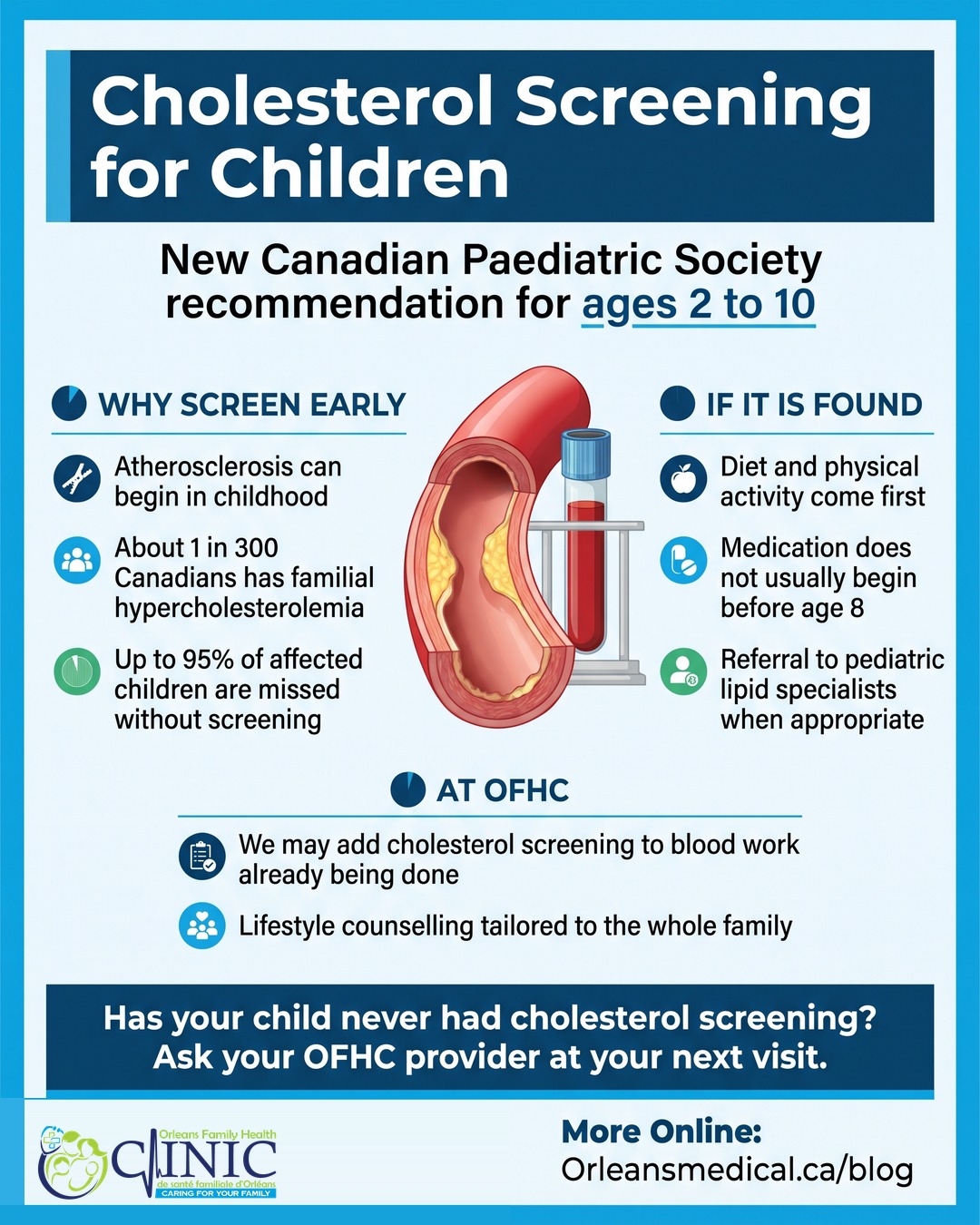
Screen Children for High Cholesterol Between Ages 2–10: New Canadian Paediatric Society Recommendation
Heart disease does not begin in adulthood. It begins in childhood.
The Canadian Paediatric Society (CPS) now recommends cholesterol screening for all children between the ages of 2 and 10 years. This marks an important shift in preventive care and reinforces what cardiovascular research has shown for decades: atherosclerosis starts early in life.
At Orleans Family Health Clinic (OFHC), we view this as a major opportunity to protect long-term cardiovascular health.
Why Screen So Early?
Atherosclerosis — the buildup of cholesterol-rich plaque in arteries — is a progressive condition that can begin in childhood. Over time, this process increases the risk of:
- Heart attack
- Premature cardiovascular disease
According to pediatric cardiologist Dr. Michael Khoury, approximately 1 in 300 Canadians has a genetic condition called familial hypercholesterolemia (FH) — a serious inherited disorder that causes extremely high LDL cholesterol from birth.
Without universal screening, up to 95% of affected children are missed.
What Is Familial Hypercholesterolemia (FH)?
Familial hypercholesterolemia is usually caused by a mutation in the LDL receptor in the liver. This mutation:
- Prevents LDL (“bad”) cholesterol from being cleared from the bloodstream
- Causes cholesterol to accumulate in the blood
- Triggers the liver to produce even more cholesterol
The result is persistently elevated LDL levels starting in childhood, dramatically increasing the risk of early heart attacks or strokes in the 30s and 40s if untreated.
Early identification changes that trajectory.
When Would Treatment Begin?
Screening can occur anytime between ages 2–10. However:
- Medication typically does not begin before age 8
- First-line management includes diet optimization and physical activity
- If LDL levels remain severely elevated, statin therapy may be initiated
Long-term safety data supports the use of statins in children 8 years and older when clinically indicated. Common medications used include:
- Lipitor (atorvastatin)
- Crestor (rosuvastatin)
Studies show that appropriately treated children can normalize cardiovascular risk into adulthood.
As Dr. Khoury emphasizes, “We’re working to treat the 20-, 30- and 40-year-old version of that child.”
How Does This Compare to U.S. Recommendations?
The American Academy of Pediatrics currently recommends universal screening between ages 9–11, with earlier screening for children who have:
- Diabetes
- High blood pressure
- A family history of FH
- A parent or grandparent with early heart disease
The new Canadian guidance provides a clearer framework for primary care providers to screen earlier and more consistently.
What This Means for Families at OFHC
At OFHC, preventive care is foundational.
We take an opportunistic approach:
- If your child is having blood work done for another reason, we may add cholesterol screening if it hasn’t been done before.
- If visits become less frequent during school years, we may screen earlier to ensure the opportunity is not missed.
- If FH is identified, we coordinate:
- Ongoing LDL monitoring
- Referral to pediatric lipid specialists when appropriate
- Lifestyle counselling tailored to the whole family
Early intervention does not label a child. It protects their future.
Why This Matters
Untreated familial hypercholesterolemia significantly increases the risk of premature cardiovascular disease.
Treated early?
The risk can be dramatically reduced — even normalized.
This is preventive medicine at its most powerful.
Have Questions?
If your child is between 2 and 10 years old and has never had cholesterol screening, speak to your OFHC provider at your next visit.
Preventing heart disease starts earlier than most people realize.
Stay Connected with Orleans Family Health Clinic!
If you found this article helpful, don’t forget to like, share, and Follow to stay up to date on our latest health tips, updates, and wellness advice.
And follow us on social media
Disclaimer: The medical information on this site is provided as an information resource only and is not to be used or relied on for any diagnostic or treatment purposes. This information does not substitute for professional diagnosis and treatment. Please do not initiate, modify, or discontinue any treatment, medication, or supplement solely based on this information. Always seek the advice of your healthcare provider first. Full Disclaimer.

