
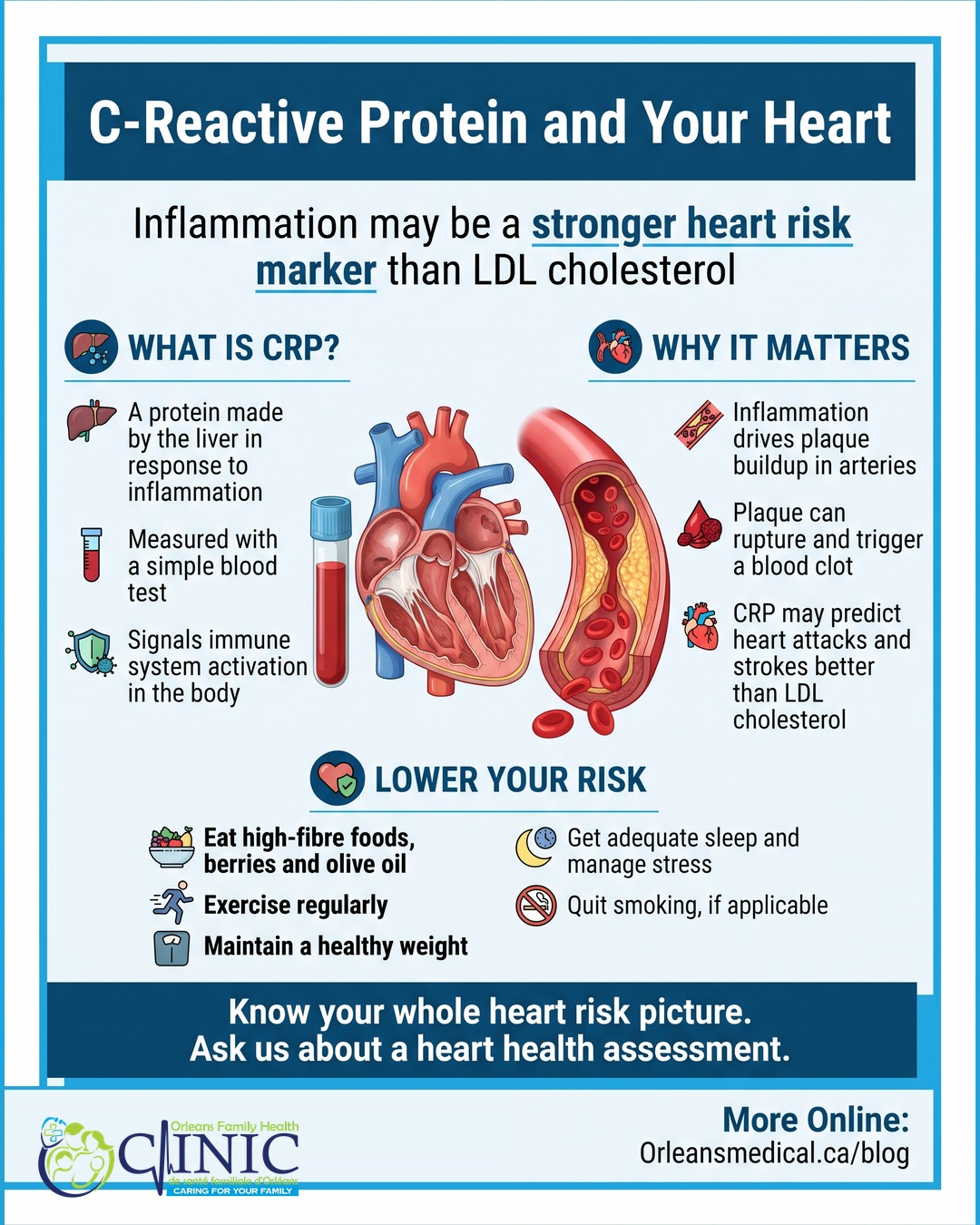
How C-Reactive Protein Has Surpassed ‘Bad’ Cholesterol as a Leading Heart Disease Risk Marker
How C-Reactive Protein Has Surpassed ‘Bad’ Cholesterol as a Leading Heart Disease Risk Marker
Heart disease remains the leading cause of death in the United States, and for decades, cholesterol levels have been the primary measure of risk. However, emerging research shows that another marker—C-reactive protein (CRP)—may be even more telling when it comes to predicting heart disease.
What is C-Reactive Protein?
C-reactive protein is produced by the liver in response to inflammation caused by infections, tissue damage, chronic conditions like autoimmune diseases, and metabolic disturbances such as obesity or diabetes. Essentially, it is a biomarker that signals immune system activation in the body.
CRP levels can be measured through a simple blood test. Here’s what the numbers mean:
- Low CRP (<1 mg/dL): Minimal inflammation, lower risk of heart disease.
- High CRP (>3 mg/dL): Increased inflammation, higher risk of heart disease.
Recent studies indicate that CRP is a stronger predictor of heart attacks and strokes than LDL (“bad”) cholesterol or even lipoprotein(a), a genetic cholesterol-related marker. Some research suggests CRP predicts heart disease risk almost as effectively as blood pressure.
Why Inflammation Matters in Heart Disease
Inflammation plays a central role in the development of atherosclerosis, the buildup of fatty plaques in arteries. When blood vessels are damaged by high blood sugar, smoking, or other factors, immune cells respond by engulfing cholesterol particles. This process forms plaque inside vessel walls.
Over decades, plaque can rupture, triggering a blood clot that blocks blood flow—causing a heart attack or stroke. This shows that while cholesterol is important, it’s the immune response that drives the progression of heart disease.
Can Diet and Lifestyle Lower CRP Levels?
Yes. Lifestyle factors significantly affect CRP production. Strategies to reduce inflammation include:
- Diet: High-fiber foods (beans, vegetables, nuts, seeds), berries, olive oil, green tea, chia and flaxseeds.
- Exercise: Regular physical activity reduces CRP and improves heart health.
- Weight management: Losing excess weight lowers inflammation.
Is Cholesterol Still Relevant?
Absolutely, but the focus has shifted from total LDL cholesterol to cholesterol particle number, which is measured by apolipoprotein B. More particles mean greater risk, even if total LDL levels are similar.
- Lifestyle impact: Exercise, fiber, nuts, and omega-3 fatty acids can reduce particle number. High sugar intake increases it.
- Lipoprotein(a): A genetic marker that makes cholesterol particles “stickier,” increasing plaque formation. Unlike other markers, it is not influenced by diet or lifestyle and only needs one lifetime measurement.
Comprehensive Heart Disease Prevention
Heart disease develops from the interplay of multiple risk factors over a lifetime. A thorough assessment including LDL cholesterol, CRP, apolipoprotein B, and lipoprotein(a) gives a clearer picture of risk.
Key prevention strategies include:
- Balanced, nutrient-rich diet
- Regular exercise
- Adequate sleep
- Stress management
- Maintaining healthy weight
- Quitting smoking, if applicable
Understanding your risk factors empowers you to make long-term lifestyle changes that protect your heart. At Orleans Family Health Clinic, we can guide you through personalized assessments and prevention strategies to support lifelong cardiovascular health.
Stay Connected with Orleans Family Health Clinic!
If you found this article helpful, don’t forget to like, share, and Follow to stay up to date on our latest health tips, updates, and wellness advice.
And follow us on social media
Disclaimer: The medical information on this site is provided as an information resource only and is not to be used or relied on for any diagnostic or treatment purposes. This information does not substitute for professional diagnosis and treatment. Please do not initiate, modify, or discontinue any treatment, medication, or supplement solely based on this information. Always seek the advice of your healthcare provider first. Full Disclaimer.
