Alcohol and the Holidays: How to Avoid Excess Drinking This Festive Season
The holiday season is often associated with celebration, family gatherings, and social events—but it is also a time when alcohol consumption tends to increase significantly. While an occasional drink may feel like part of the festivities, excessive alcohol intake can have real and lasting consequences for both physical and mental health.
At Orleans Family Health Clinic (OFHC), we see firsthand how alcohol overuse—especially during high-stress periods like the holidays—can affect patients’ overall wellbeing. Understanding the risks and having practical strategies in place can help you enjoy the season while protecting your long-term health.
Why Alcohol Intake Increases During the Holidays
The holidays create a perfect storm for increased drinking:
- More frequent social gatherings
- Heightened emotional stress, grief, or loneliness
- Social pressure to “join in”
- Disrupted routines and late nights
For some individuals, alcohol becomes a way to cope with stress, sadness, or social anxiety. For others, it’s simply habitual or culturally normalized. Regardless of the reason, increased intake carries health risks that are often underestimated.
The Health Impact of Alcohol
Alcohol is classified as a Group 1 carcinogen, meaning there is strong evidence that it directly increases cancer risk. Regular or excessive alcohol use has been linked to several cancers, including:
- Breast cancer
- Esophageal cancer
- Colorectal cancer
- Liver cancer
Beyond cancer risk, alcohol affects nearly every organ system:
Short-term effects include:
- Impaired judgment and coordination
- Increased risk of falls and injuries
- Gastrointestinal upset and dehydration
- Blackouts and alcohol poisoning
Long-term effects may include:
- Liver disease
- Heart disease and high blood pressure
- Mood disorders, anxiety, and depression
- Memory impairment and neurological damage
- Nutritional deficiencies (especially B vitamins)
Alcohol can also interact dangerously with many medications, including sedatives, antidepressants, and some antibiotics—something your primary care provider can help you review safely.
Is There a “Safe” Amount of Alcohol?
Canadian guidelines have evolved significantly in recent years. Current evidence suggests:
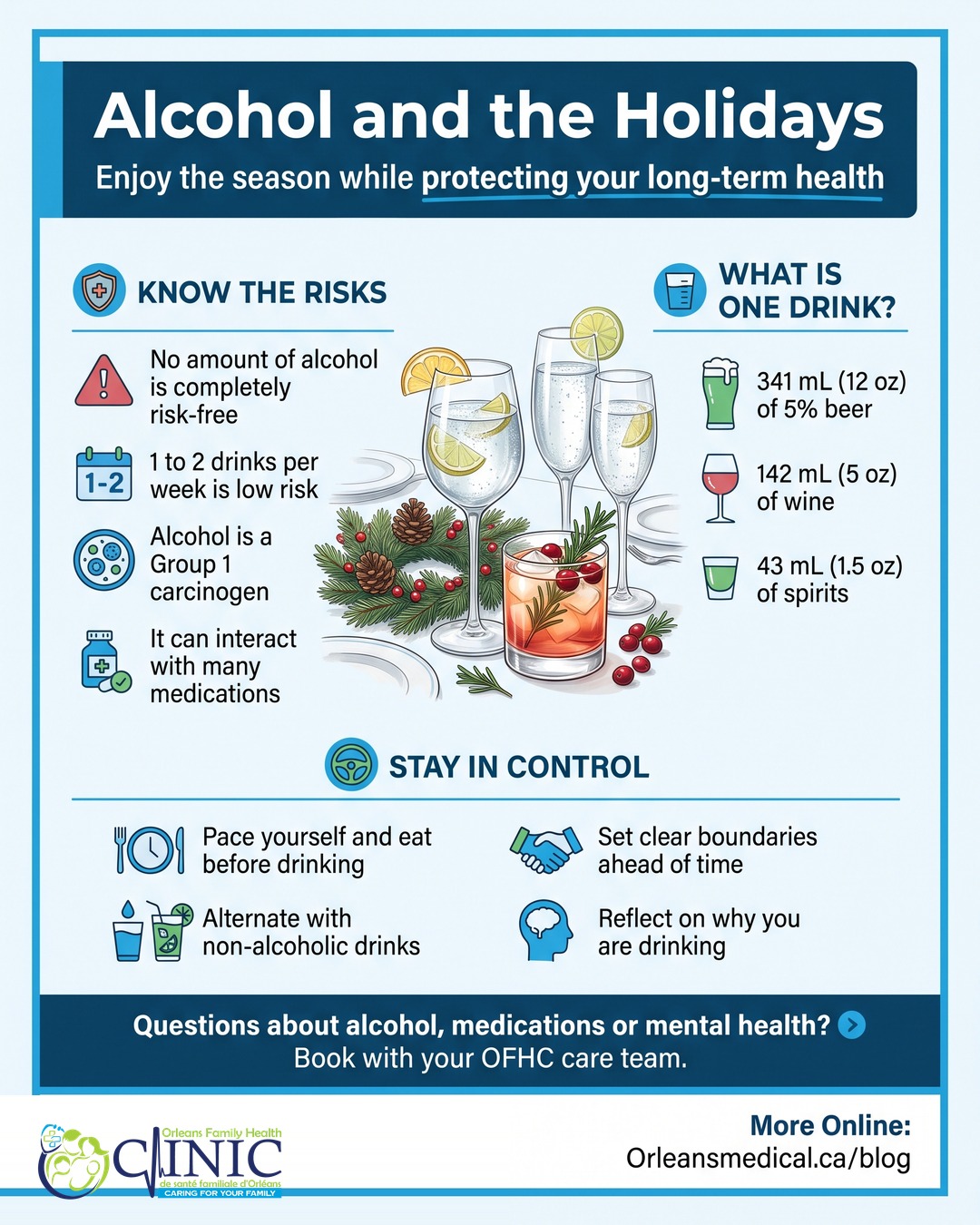
- No amount of alcohol is completely risk-free
- 0 drinks per week = no risk
- 1–2 drinks per week = low risk
Risk increases steadily beyond this range, especially when alcohol consumption is concentrated into a few days (such as holiday parties).
Importantly, tolerance varies from person to person. Individuals who drink infrequently may experience harm with fewer drinks, and cumulative exposure over time matters more than any single occasion.
Practical Strategies to Avoid Over-Drinking
1. Know What “One Drink” Actually Is
A standard drink equals:
- 341 mL (12 oz) of 5% beer
- 142 mL (5 oz) of wine
- 43 mL (1.5 oz) of spirits
Cocktails and free-poured drinks often contain more than one standard serving.
2. Pace Yourself
Your liver takes about one hour to process one standard drink. Spacing drinks out—and alternating with non-alcoholic beverages—helps prevent overload.
Eating before drinking also slows alcohol absorption.
3. Choose Alternatives
You do not need alcohol to participate socially. Consider:
- Sparkling water or flavoured soda
- Mocktails or non-alcoholic beer/wine
- Watered-down drinks
Simply having a drink in your hand often reduces social pressure.
4. Set Clear Boundaries Ahead of Time
Have a plan and a response ready:
- “I’m on medication.”
- “I have an early morning.”
- “I’m taking a break from alcohol.”
Clear, simple boundaries are usually respected more than people expect.
5. Reflect on Why You’re Drinking
If alcohol is being used to manage stress, loneliness, or emotional pain, it may be helpful to explore healthier coping strategies—such as physical activity, relaxation techniques, or speaking with a healthcare professional.
At OFHC, we strongly encourage addressing root causes rather than masking symptoms.
How OFHC Can Support You
As a comprehensive, team-based primary care clinic, OFHC provides:
- Preventive health counselling
- Medication reviews and interaction checks
- Mental health support and referrals
- Ongoing, longitudinal care tailored to your life circumstances
If alcohol use—or pressure to drink—is affecting your health, mood, sleep, or relationships, this is something your family physician wants to know.
A Healthier Holiday Season Starts With Informed Choices
The holidays can still be joyful, festive, and meaningful without excess alcohol. Small, intentional changes can significantly reduce health risks while allowing you to stay present, connected, and well.
If you have questions about alcohol use, medication safety, or mental health support, book an appointment with your OFHC care team. We are here to support you—during the holidays and all year long.
Stay Connected with Orleans Family Health Clinic!
If you found this article helpful, don’t forget to like, share, and Follow to stay up to date on our latest health tips, updates, and wellness advice.
And follow us on social media
Disclaimer: The medical information on this site is provided as an information resource only and is not to be used or relied on for any diagnostic or treatment purposes. This information does not substitute for professional diagnosis and treatment. Please do not initiate, modify, or discontinue any treatment, medication, or supplement solely based on this information. Always seek the advice of your healthcare provider first. Full Disclaimer.
