
Early Introduction of Peanuts, Eggs, and Fish May Lower Food Allergy Risk in Babies: What Parents Should Know
Early Introduction of Peanuts, Eggs, and Fish May Lower Food Allergy Risk in Babies: What Parents Should Know
A major new Canadian study published in JAMA Pediatrics reinforces an important shift in pediatric nutrition guidance: introducing common food allergens earlier in infancy — and continuing them regularly — may significantly reduce a child’s risk of developing food allergies.
For many years, parents were advised to delay introducing foods like peanuts and eggs. Stronger evidence now shows the opposite approach is safer and more protective for most infants.
At Orleans Family Health Clinic (OFHC), where we focus on Complete, Comprehensive, Caring, Connected Care, our physicians regularly counsel families on safe infant feeding practices and allergy prevention.
What the New Research Found
Researchers analyzed more than 190 global food allergy studies to identify the strongest risk factors for developing food allergies. Key findings included:
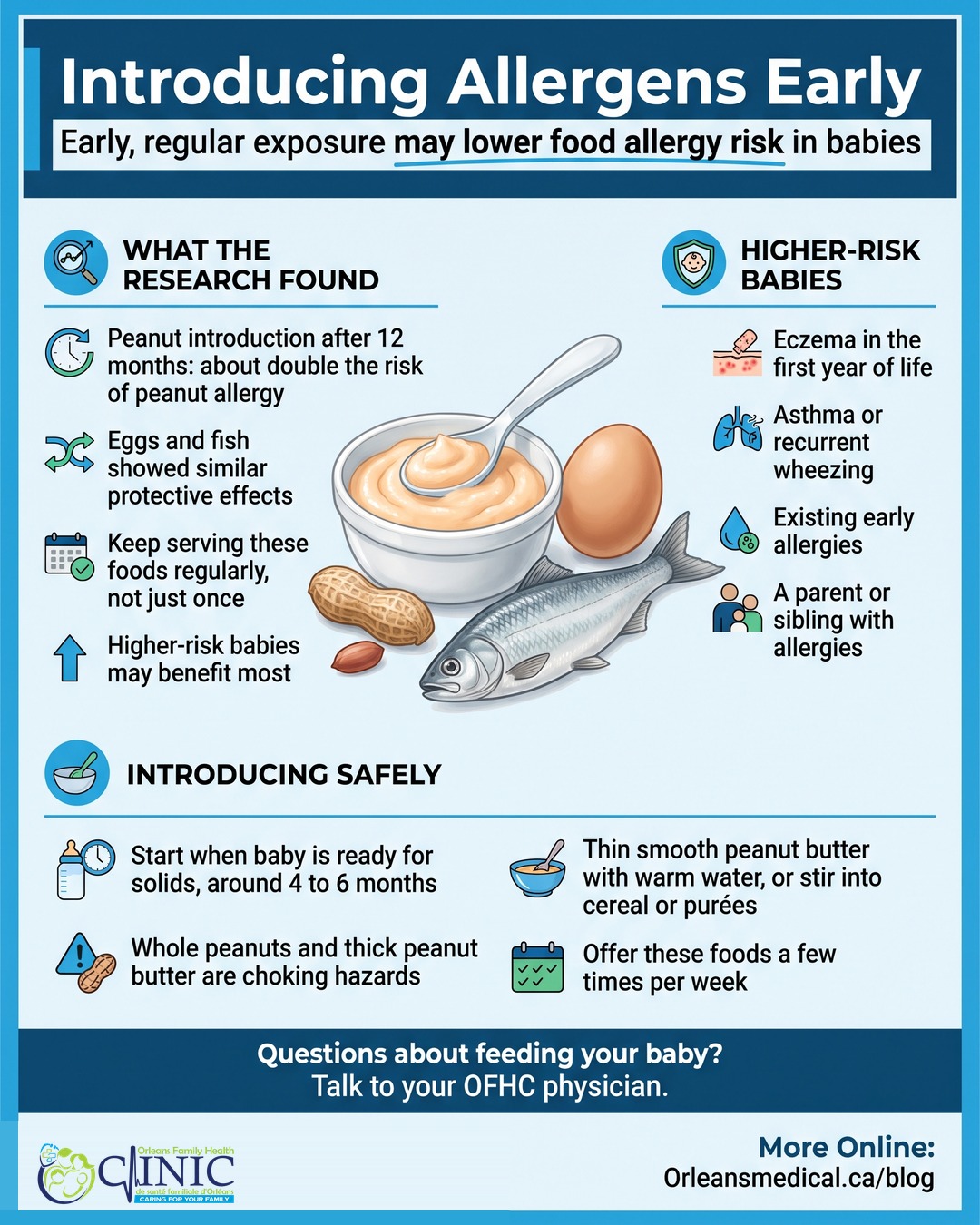
- Babies introduced to peanut-containing foods after 12 months had about double the risk of peanut allergy
- Similar protective effects were seen with early introduction of eggs and fish
- Consistent ongoing exposure — not just one-time introduction — is important to maintain tolerance
- Early introduction appears especially beneficial for higher-risk infants
According to the study authors, the timing window often begins when a baby is developmentally ready for solids — typically around 4 to 6 months of age, depending on motor readiness and feeding cues.
Which Babies Are Higher Risk for Food Allergy?
The study confirmed higher food allergy risk among infants who have:
- Eczema in the first year of life
- Asthma or recurrent wheezing
- Existing early allergies
- A parent or sibling with allergies
- Male sex (minor risk factor)
- First-born status (minor risk factor)
Importantly, experts emphasize that higher-risk infants may benefit the most from early allergen introduction, not delay — provided introduction is done safely and appropriately.
How to Safely Introduce Peanut and Other Allergens
Whole peanuts and thick peanut butter are choking hazards and should not be given directly to infants. Safer methods include:
- Mixing smooth peanut butter with warm water to thin it, then cooling
- Stirring into infant cereal, yogurt, or fruit/vegetable purées
- Using peanut powder mixed into soft foods
Other common household allergens to consider introducing early (when developmentally appropriate):
- Tree nuts (in safe forms)
- Shellfish
The Canadian Paediatric Society recommends that once introduced, these foods should be included a few times per week to help maintain tolerance.
Should Babies Be Tested Before First Exposure?
Current Canadian pediatric guidance does not recommend routine pre-screening or in-office testing before introducing allergenic foods in most infants.
Evidence shows that:
- Severe reactions at first exposure in infancy are very uncommon
- Delaying introduction may increase — not decrease — risk
However, infants with severe eczema or complex medical histories should be discussed with a primary care clinician first.
At OFHC, our physicians assess each infant individually and guide families based on medical history and risk profile.
What About Antibiotics and Allergy Risk?
The study also observed a possible link between antibiotic use in the first month of life and increased allergy risk. This may relate to microbiome disruption, though more research is needed.
The takeaway is balanced:
- Avoid unnecessary antibiotic use
- Continue to use antibiotics when medically required
- Focus on early dietary diversity and appropriate allergen introduction
How OFHC Supports Families with Infant Feeding and Allergy Prevention
Through our integrated care model with Orleans Family Health Clinic physicians and healthcare partners, we provide:
- Infant feeding counselling
- Allergy risk assessment
- Eczema and asthma management
- Early childhood preventive care
- Rapid access visits for feeding or reaction concerns
- Connected follow-up within our rostered care model
Our physician recruitment and team-based structure allow more families to be attached to primary care — which is critical for early preventive guidance like this.
Early conversations lead to better outcomes.
Stay Connected with Orleans Family Health Clinic!
If you found this article helpful, don’t forget to like, share, and Follow to stay up to date on our latest health tips, updates, and wellness advice.
And follow us on social media
Disclaimer: The medical information on this site is provided as an information resource only and is not to be used or relied on for any diagnostic or treatment purposes. This information does not substitute for professional diagnosis and treatment. Please do not initiate, modify, or discontinue any treatment, medication, or supplement solely based on this information. Always seek the advice of your healthcare provider first. Full Disclaimer.
